


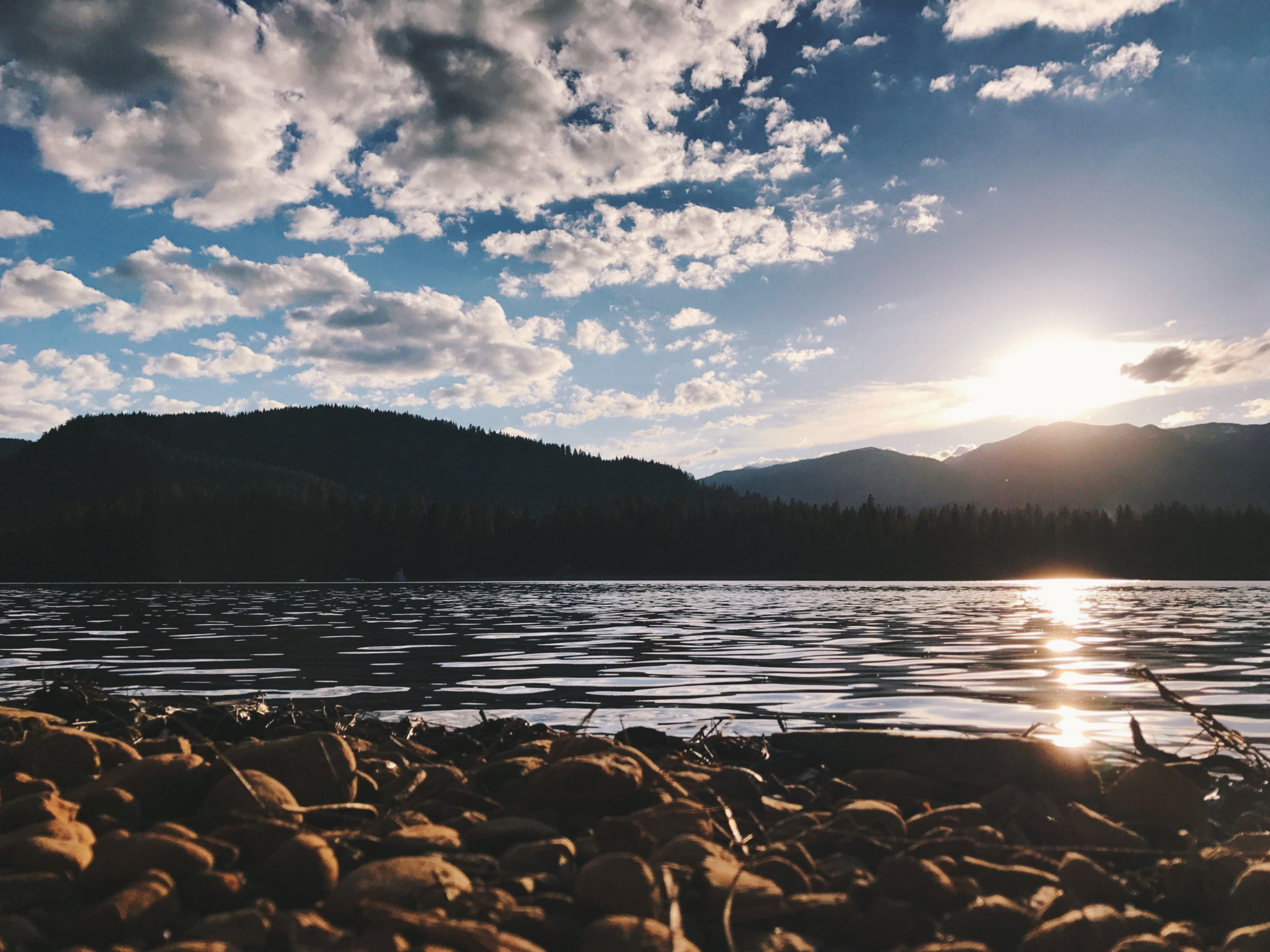


When spring and summer arrive in Siskiyou, the rugged landscapes burst into color with a carpet of wildflowers that rival any botanical garden. From alpine meadows to volcanic plains, this region offers some of Northern California’s most spectacular wildflower displays. Thanks to its varied elevations and unique blend of Klamath, Cascade, and coastal plant communities, the region boasts a long blooming season and an incredible diversity of species. Whether you’re a casual hiker or a wildflower photography enthusiast, below is your guide to the types of wildflowers you might see, where to find them, and what time of year each area blooms best.
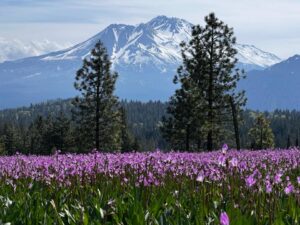
(image: Wes Highfill)
What Types of wildflowers can be found?
Siskiyou is home to hundreds of wildflower species, including both common favorites and rare endemics found nowhere else. Look for these:
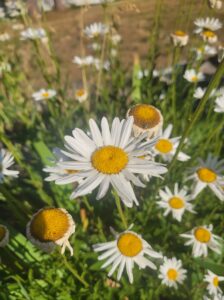
- Shasta Daisy – a hybrid variety, developed in 1890, and named for Mount Shasta because its petals were the color of the snow can be found all throughout Siskiyou.
- California Poppy – also called the Golden Poppy, this is the state flower of California, and can be found along highways and other roadways.
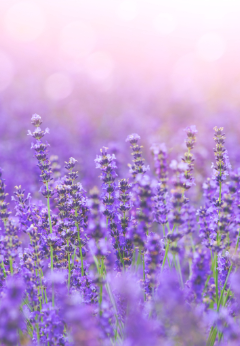
- Lupines – tall, colorful spikes of pea-like blooms that brighten mountain meadows and forest edges throughout the summer.
- Western Pasqueflower – a high‑elevation wildflower that becomes especially showy as melting snowbanks trigger its late‑spring to early‑summer bloom.
- Penstemons – hardy, colorful wildflowers often found in the rocky high‑elevation areas of the Siskiyou Mountains, where several species thrive on open ridges and rugged terrain
- Monkshood, Phacelia, Larkspur – vibrant wildflowers commonly found in the wet and dry meadows of high‑elevation areas,
- Endemic species like Henderson’s Horkelia, California Lady’s Slipper, Bristly Gentian,Howell’s Tauschia, Siskiyou Bitterroot, Bolander’s Lily and many more can all be found thriving in the diverse microclimates of the Siskiyou region.
FUN FACT: With more than 100 species at Lava Beds National Monument alone, Siskiyou offers one of the richest wildflower experiences in Northern California.
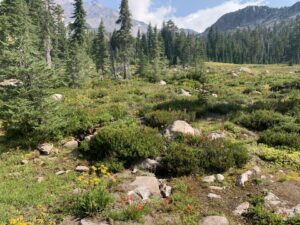
(Image: Noelle Harrison)
Where to find wildflowers?
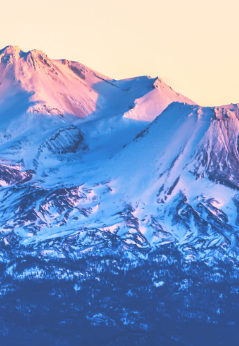
Mount Shasta: (South Gate Meadow, Panther Meadows, Old Ski Bowl)
Best for: Lush summer meadows and classic mountain wildflowers
Bloom window: Late July to early August for peak display
The South Gate Meadow Trail, accessible from the Old Ski Bowl, winds through lush meadows crisscrossed by spring-fed streams and dotted with purple lupines, western pasque flowers, and white blossoms. Panther Meadows, sacred to local tribes, is another must-see, offering a peaceful setting and vibrant floral displays beneath the towering peak. Mount Shasta’s alpine trails are a wildflower wonderland in late July and early August
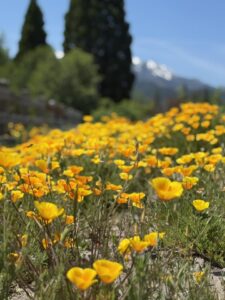
(image: Paula Palmer)
Best for: Longest bloom season in the region
Bloom window: March through September
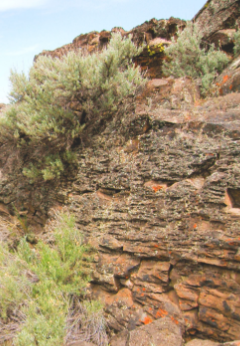
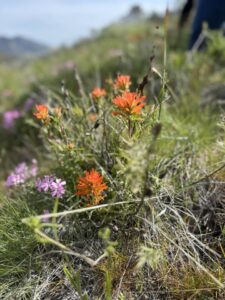
Thanks to its arid, high-desert climate, Lava Beds National Monument boasts one of the longest wildflower seasons in the region—stretching from March through September. Over 100 species bloom here, including desert parsley, monkeyflower, and blazing star. The contrast of delicate flowers against the stark volcanic rock makes for a surreal and unforgettable experience.
(image: Noelle Harrison)
Best for: Adventurous hikers seeking remote blooms
Bloom window: July through August
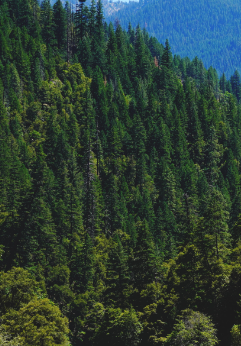
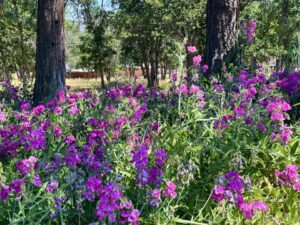
For the truly adventurous, the Marble Mountain Wilderness in the Klamath National Forest offers remote trails and sprawling meadows filled with wildflowers like western columbines, checkerblooms, and butterfly sunflowers. Peak bloom is typically from July to August, and the best displays are found in open meadows and rocky alpine areas.
(image: Lisa Knowles Hinkle)
Best for: Viewing both flora and fauna at the same time!
Bloom window: Spring wildflowers in grasslands: April–June, Wetland and meadow species: April–July, Drought‑tolerant foothill and shrubland blooms: May–July, Late‑season high‑elevation blooms (like lupine) appear later higher up, but valley lupines bloom earlier—May–June
For a more accessible wildflower experience, the Shasta Valley Wildlife Area offers sweeping views of Mount Shasta and fields of wildflowers in spring. It’s a great spot for birdwatching too, making it a perfect family-friendly outing. The area includes juniper woodlands, riparian corridors, grasslands, and seasonal wetlands, meaning its wildflower species overlap strongly with those documented throughout Siskiyou County’s mid‑ to low‑elevation habitats.
(image: Sally Kigasawa)
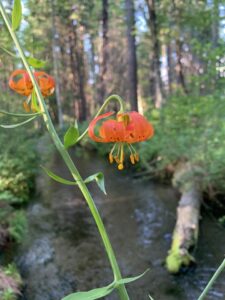
Klamath National Forest
Best for: High-elevation wildflower hikes
Bloom window: Late May through late July (with flowers as early as May and as late as early August)
(image: Noelle Harrison)
When to Visit: Bloom Timeline Overview
Because Siskiyou County spans elevations from ~2,000 feet to nearly 14,000 feet (Mt. Shasta), bloom periods vary dramatically:
- Low elevations (1,500–3,000 ft):
Early March through late May - Mid-elevations (3,000–6,000 ft):
April through July - High elevation & subalpine areas (6,000+ ft):
Late June through August
If you’re planning multiple trips, you can effectively “chase” the bloom uphill from spring through late summer.
(image: Paula Palmer)
Tips for Wildflower Viewing
- Stay on trails—many species are fragile, and some are federally protected.
- Don’t pick flowers, especially in sensitive alpine zones and botanical areas.
- Bring water and sun protection, especially at high elevations.
- Check road access early in the season; snow may limit travel at higher elevations.
- Bring your camera and tag #SEESISKIYOU or #DISCOVERSISKIYOU, we would love to see your finds!
(image: Lisa Knowles Hinkle)
All images featured with photographer’s permission.